
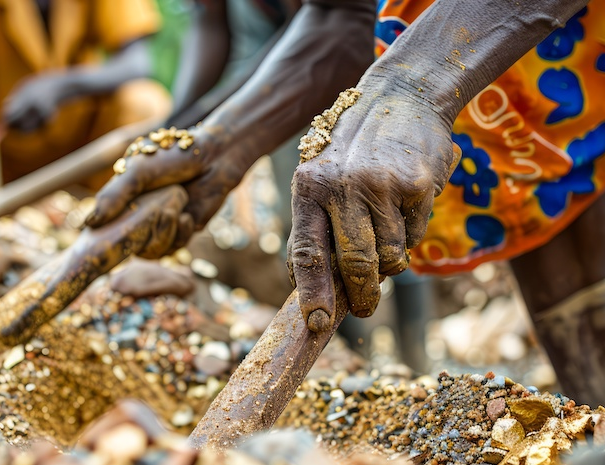
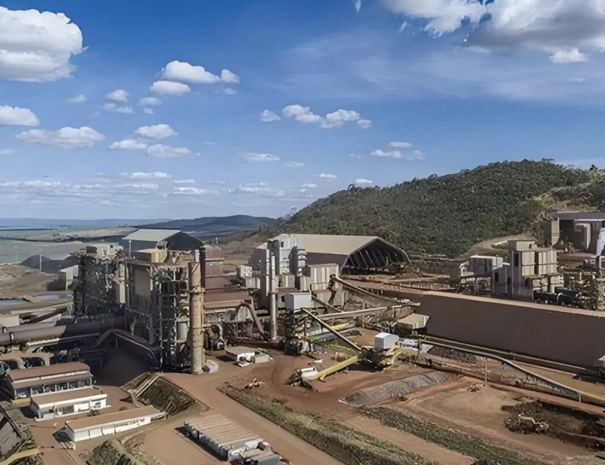
Gold: Estimated gold reserves stand at 130 million tonnes. Zimbabwe's historical peak gold production reached 27.5 tonnes per annum. In 2015, gold output was 20.02 tonnes, a year-on-year increase of 30.1%. However, due to weak international gold prices, revenue reached US$737 million, up only 20%—a smaller increase than the production growth. Gold production rose to 22.7 tonnes in 2016 (up 13.4% year-on-year) and further to 26.5 tonnes in 2017 (up 16.7% year-on-year). The international gold price saw a slight increase compared to the previous year, averaging US$1,280 per ounce in the fourth quarter. The gold industry also faces challenges such as rising production costs and difficulties in securing long-term investment.
Copper: Estimated resources include copper metal reserves of 5.2 million tonnes, with total ore volume of 2.83 billion tonnes at an average grade of 1.18%. Copper output in 2015 was 8,262 tonnes, remaining largely flat compared to the previous year, while revenue declined by 10% to US$39.9 million. Production increased to 8,940 tonnes in 2016 (up 8.2% year-on-year) and reached 9,336 tonnes in 2017 (up 4.43% year-on-year).
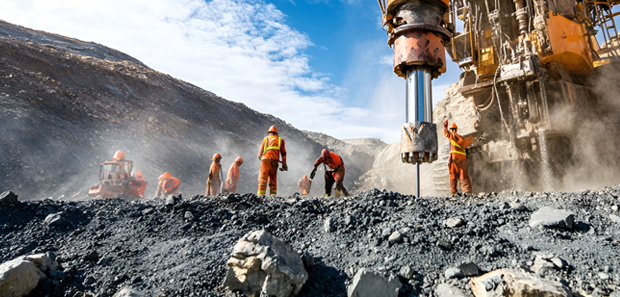
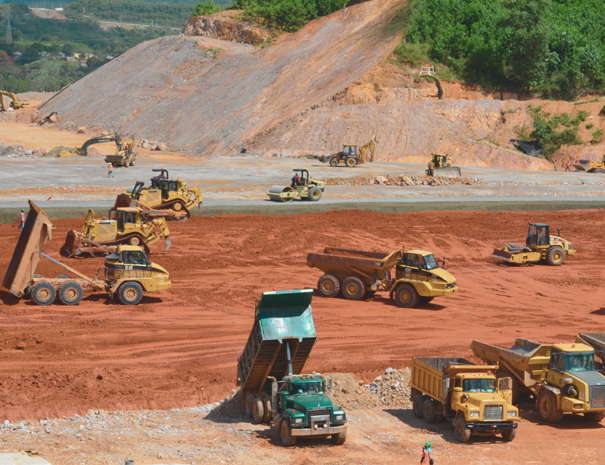
Zimbabwe's geological history spans 3.8 billion years, providing favorable conditions for the formation of diverse mineral resources. Over 4,000 gold mineralized sites have been identified in the country. However, Zimbabwe has yet to widely adopt modern mining technologies, with most extraction still conducted through existing mine shafts. This indicates substantial potential for future development in Zimbabwe's mining sector.
Zimbabwe's Mining Sector Offers Investment Security
In Zimbabwe, private property and ownership rights—including in the mining sector—are inviolable. While all mineral rights are vested in the state, holders of valid mining licenses are permitted to conduct exploration, development, mineral processing, and sales. The process for obtaining mining licenses is straightforward, fully transparent, and ensures fairness and impartiality.
Zimbabwe Encourages Mining Investment
The mining sector benefits from a corporate tax rate of 25%, which is 10% lower than rates applied to other industries. Capital goods imported for mining development qualify for duty rebates. Zimbabwe imposes no restrictions on foreign currency holdings domestically. There are no limitations on dividend remittances or capital repatriation, allowing 100% recovery of invested capital.
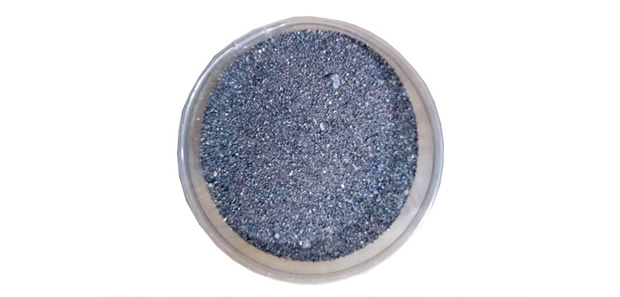
Specifications | South Africa Witwatersrand Mine | Zimbabwe Flotation Gold Ore |
Gold (Au) | 60-150 g/t min | 80-200 g/t min |
Silver (Ag) | 50-200 g/t (Associated) | 30-150 g/t |
Sulfur (S) | 25-35% | 30-40% |
Arsenic (As) | ≤ 1.5% (Requires Roasting) | ≤ 1.0% |
Carbon (C) | ≤ 3% (Affects Cyanidation) | ≤ 2% |
Particle Size | -45μm (95%) | -74μm (90%) |
Packaging | Sealed Iron Drum (50kg/drum) | Sealed Ton Bag with Lead Seal |
Note: The Witwatersrand ore requires roasting pretreatment due to its arsenic content, while the Zimbabwean ore's lower carbon content makes it more suitable for direct cyanidation processes.
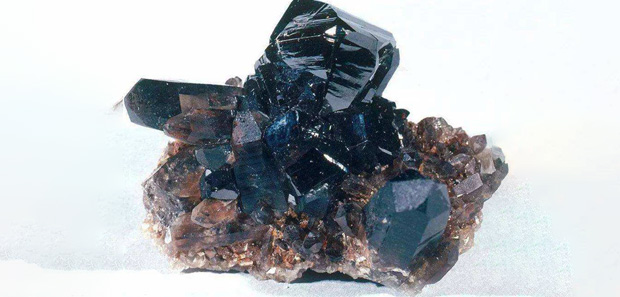
Zimbabwe is endowed with nearly 80 types of mineral resources, including gold, platinum group metals (PGMs), nickel, chromium, diamonds, asbestos, and granite, with approximately 40 types having been verified. Diamonds, PGMs, chromium, gold, nickel, copper, iron ore, and coal represent Zimbabwe's most strategic mineral assets. The country's renowned Great Dyke region hosts abundant mineral deposits. Due to the absence of detailed exploration data from the Zimbabwean government, available figures from various sources show significant discrepancies and should be treated as preliminary estimates only. Based on data from the Ministry of Mines and other sources, the estimated resources of Zimbabwe's key minerals are as follows:
Diamonds: Zimbabwe commenced formal diamond mining and export in 2008, achieving rapid production growth. Rough diamond output surged from 600,000 carats in 2008 to 16.9 million carats in 2013, ranking first globally and accounting for 13% of world production that year. However, due to lower quality, the average price was only US$33 per carat—significantly below the world average of US$93—resulting in a share of only 4.6% in global sales value.
Platinum Group Metals (PGMs): With 28 billion tonnes of ore at an average grade of 4 g/t, Zimbabwe holds the world's second-largest PGM reserves. In July 2014, production was impacted by the collapse of the Bimha platinum mine operated by Zimplats, the country's largest PGM producer. Platinum output declined to 440,000 ounces in 2014, down 4.5% from 460,000 ounces in 2013. Production saw a slight recovery to 443,000 ounces in 2015, but PGM revenue fell 23% to US$381 million due to weak international prices. Output increased to 533,000 ounces in 2016, a 23.3% year-on-year growth, before edging down to 503,000 ounces in 2017. Despite some price recovery, the average platinum price remained low at US$974 per ounce in the fourth quarter of 2017. Zimbabwe's PGM sector is dominated by three major miners: Zimplats (controlled by South Africa's Implats), Mimosa in the Zvishavane region, and Unki Mine owned by Anglo American Platinum.
Chromium: Estimated resources total 3.26 billion tonnes of ore with Cr₂O₃ content ranging between 40% and 50%, and an Fe/Cr ratio of 1:2 to 1:3. Ferrochrome reserves are estimated at 930 million tonnes, ranking second globally. While the annual mining capacity for chromite stands at 1.5 million tonnes, actual extraction was 267,000 tonnes in 2015, down 34.6% year-on-year. In 2016, the government imposed restrictions on raw ore exports, leading to a further 58.1% decline to 112,000 tonnes. However, 2017 saw a strong rebound in ferrochrome production, which reached 1.674 million tonnes, driven by higher international prices and increased investment by mining companies.