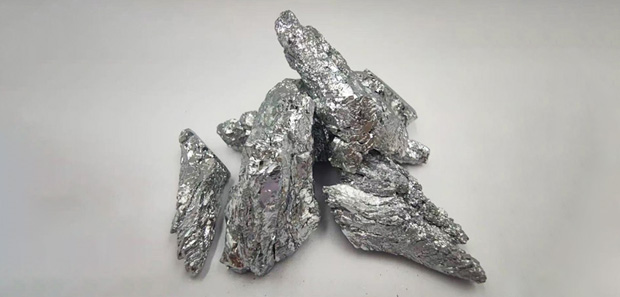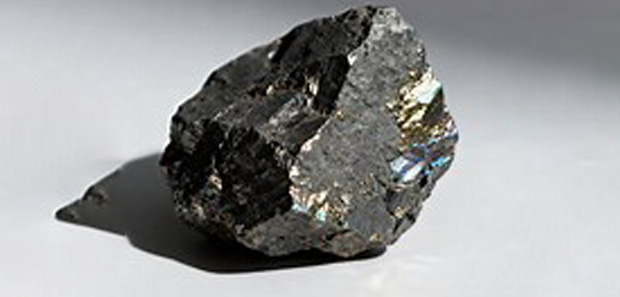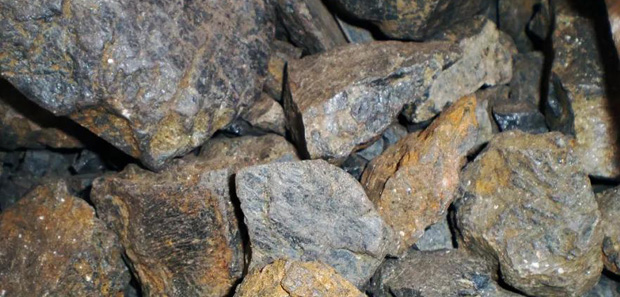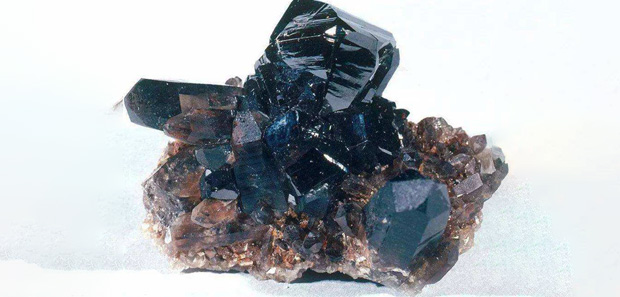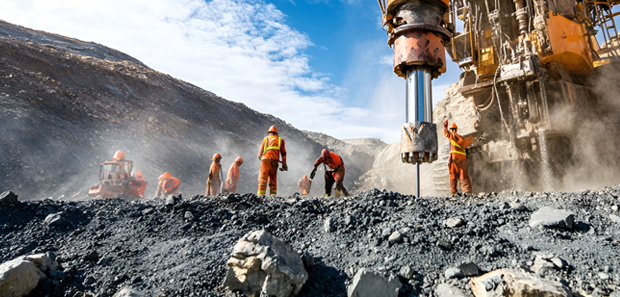

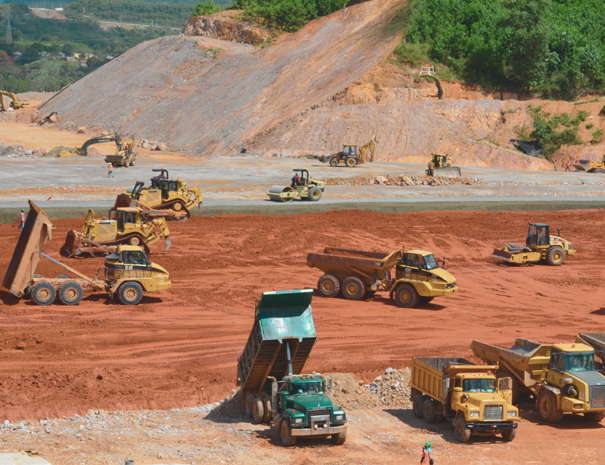
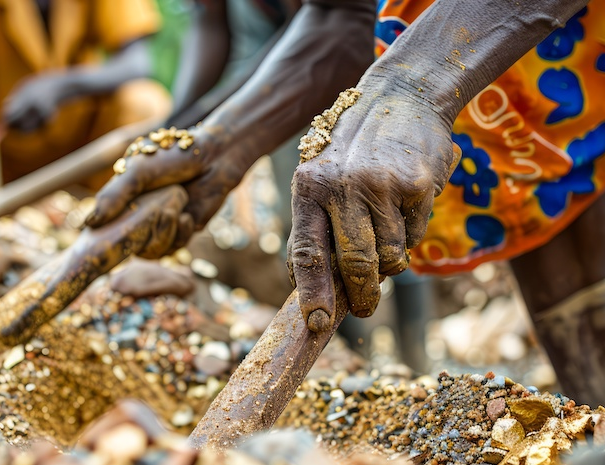
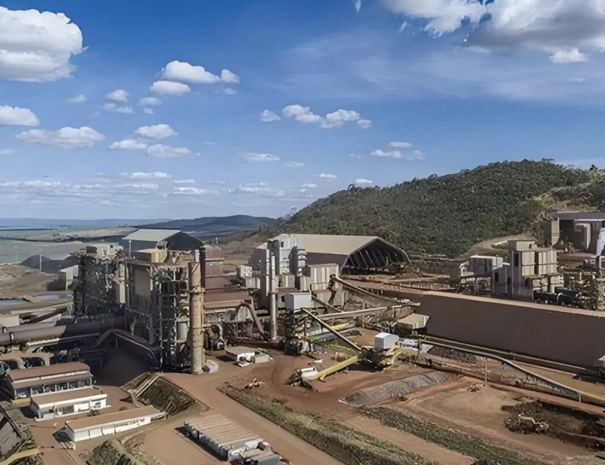
The Katanga Tin Belt, forming part of the Kibaran Belt, extends over 500 kilometers from Kolwezi to Kalemie and ranks as one of Africa's most significant tin metallogenic provinces. It hosts several major deposits, including the Bisie deposit in North Kivu Province and the Manono-Kitotolo deposit in Katanga Province. These deposits are predominantly pegmatite-type, with cassiterite as the primary ore mineral, accompanied by spodumene and columbite-tantalite as associated minerals.
Specifications | DRC Manono Tin Mine | Nigeria Bauchi Mine |
Tin (Sn) | 55-65% min | 60-70% min |
Iron (Fe) | ≤ 5% | ≤ 3% |
Copper (Cu) | ≤ 0.5% | ≤ 0.3% |
Arsenic (As) | ≤ 0.8% | ≤ 0.5% |
Bismuth (Bi) | ≤ 0.3% | ≤ 0.2% |
Particle Size | -74μm (80%) | -100μm (90%) |
Packaging | Iron Drum (200kg/drum) | Iron Drum |
Note: Nigerian ore features low uranium-thorium content (ThO₂ ≤ 0.05%), making it suitable for electronic-grade tin smelting.
The Democratic Republic of the Congo (DRC), located in Central Africa, possesses one of the world's richest mineral resource endowments. In recent years, the country's tin concentrate production has grown rapidly, primarily driven by the commissioning of new production capacity, making it one of China's key suppliers of tin concentrate. According to the latest statistics from China Customs, imports of tin concentrate from the DRC reached 31,300 tonnes between January and November 2024, representing a year-on-year increase of 20.25%. This figure underscores the DRC's significant role in the global tin concentrate supply. Although political and economic challenges persist in the DRC, the situation has improved compared to past periods of instability, contributing to more stable development of mining activities.
The DRC's abundant mineral resources are closely linked to the geological setting of the Central African Kibaran Belt. The Kibaran Belt is a Mesoproterozoic tectonic zone stretching across the Katanga Province in southern DRC and extending northwards into southwestern Uganda. It is a typical intracontinental cratonic domain, whose formation is associated with multiple stages of geological evolution and mineralization events.
The Kibaran Belt is primarily composed of metasedimentary and volcanic rocks, having undergone multiple orogenies and magmatic activities. Its eastern part borders the Archean basement rocks of the Tanzania Craton, while its western and southern parts are bounded by Paleoproterozoic metamorphic rock series. The Katanga Tin Belt, part of the Kibaran Belt, stretches over 500 kilometres from Kolwezi to Kalemie and is one of Africa's most significant tin metallogenic belts. It hosts several major deposits, including the Bisie deposit in North Kivu Province and the Manono-Kitotolo deposit in Katanga Province. These deposits are predominantly pegmatite-type, with cassiterite as the core mineral, associated with spodumene and columbite-tantalite.